2026.02.20 ECVD HistoRound — Group 3「C.I. Feb 19」(Chiara Brachelente + Ilaria Porcellato)
官方標題:Group 3 C.I. Feb 19(無主題名)。歐洲 2026-02-19(四)=台灣 2/20 凌晨。Group 3=第三年住院醫師。 ⚠️ 錄影從第一個案例的描述中段開始(「it should be recording now」);45 分鐘後兩位老師都有會議提早結束,剩下 2 片延到 4 月(Ilaria:「兩個月的懸念」;想先知道答案可寫信要)。 逐字稿:
逐字稿/2026.02.20 官方 Group 3 Feb 19 逐字稿(英文原文).txt;截圖:attachments/2026.02.20_official/(右側 Zoom 欄已裁)。 出席:Adamantia Pseftogka、Lotta、Estelle Buendia、Bello Suárez、Sarah P、Mélanie L、Chiara、Mirabela、Miriam…(+35)
⭐ 本場考點速記(30 秒複習)
- 🔴 型態學診斷(morphologic diagnosis, morph)最少要有「五個字」的要素:嚴重度、pattern/分布位置、過程名稱、修飾語(如 eosinophilic、ulcerative)、病程時間(acute/subacute/chronic)——Ilaria:“remember the five words”。
- 🔴 Morph 要「最少的詞、最高的特異性」並給病因提示;講師明說考試不會因為 morph 太長或多寫 eosinophilic pustules 而扣分。
- Nibbles=蟎與表皮最接近處、patchy 離散的嗜伊紅球移行灶/spongiotic vesicle/eosinophilic pustule——沒看到蟎也強烈暗示外寄生蟲;沒找到蟎就只列鑑別、不寫病名。
- 貓+granulomatous+flame figures → 嗜伊紅性肉芽腫複合症(eosinophilic granuloma complex, EGC)(非 pathognomonic 但最可能);寫了 granulomatous 就不必再寫 giant cells/epithelioid cells。
- 🔴 Epithelioid macrophages(柵欄狀、空泡狀染色質、均質嗜伊紅胞漿、多角形)vs foamy macrophages(圓、泡沫胞漿):Ilaria 自己考病理考試時兩個都寫以拿到關鍵字;沒有尺寸門檻。
- Flame figure 內偏藍的區域=嗜伊紅球核碎屑,不是壞死(壞死偏粉紅);🔴 nodular 病灶建議從核心開始描述、細胞依數量排序,但考試從上往下描述也完全可以。
- 已複習
📋 本場案例一覽
| # | 玻片 | ⏱ | 物種 | 診斷 | 一句話重點 |
|---|---|---|---|---|---|
| 1 | (第一片) | 00:00–21:00 | 犬 | Sarcoptic mange hypersensitivity(給定診斷;片中找不到蟎) | nibbles(蟎接觸處的嗜伊紅球小灶);橢圓「隧道」;morph 要短但要給病因提示 |
| 2 | 32 | 21:00–45:00 | 貓 | Eosinophilic granuloma complex(collagenolytic granuloma) | nodular pattern;epithelioid macrophages 的定義;morph 寫 granulomatous 就不必再寫巨細胞 |
主要型態/Morph(依逐字稿補):Case 1=Chronic, moderate, perivascular to interstitial eosinophilic dermatitis with severe spongiosis, severe crusting and eosinophilic pustules(講師版)|Case 2=Nodular pattern;Severe, chronic, multifocal to coalescing eosinophilic and granulomatous dermatitis(+with flame figures)
🧫 1. 犬 sarcoptic mange hypersensitivity(⏱ 00:00–21:00,Mirabela 描述)
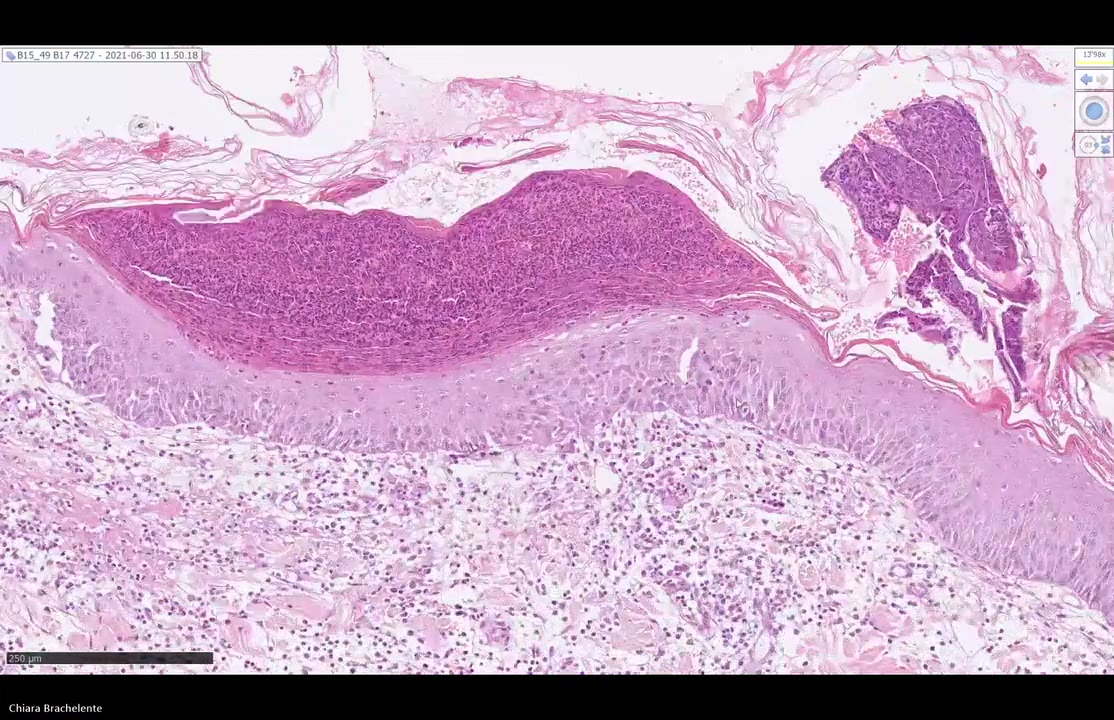
描述(錄到的部分): 表皮內垂直裂隙+真皮表皮裂隙(判為假影,但由嚴重 spongiosis 促成,邊緣粗糙);找不到蟎;一個界線清楚的橢圓空腔——Mirabela 只能說形狀像隧道;Ilaria:掉出細胞碎屑會是梭形裂隙,這麼圓、這麼規則不像假影,大小接近蟎的橫切面,可能是隧道的起點或終點。真皮:diffuse moderate–severe 淺至中層水腫;moderate 浸潤,嗜伊紅球為主+嗜中性球、漿細胞、巨噬細胞、少數肥大細胞。
Nibbles(⏱ 05:00–08:30): 學員記得上次討論過但認不出。定義(chat 引書):「嗜伊紅球在蟎附近穿過表皮、形成小而離散的膿疱;表面可平坦或略凹陷」=蟎與表皮最靠近的接觸點;特徵是patchy、小灶狀的嗜伊紅球聚集+spongiosis → 可演變成 spongiotic vesicle 或 eosinophilic pustule。片中有一個 spongiotic vesicle 含少數嗜伊紅球、一個 subcorneal/intracorneal 嗜伊紅性膿疱、其下有嗜伊紅球 exocytosis 開始 → 這種離散的嗜伊紅球移行灶即使沒看到蟎也強烈暗示外寄生蟲。
痂還是膿疱? Mirabela 寫 crust;Ilaria:保留結構的可叫 intracorneal pustule(舊的 subcorneal 膿疱往上移)——膿疱終究會變痂,是細微差別。
Chronicity: 發炎很急性(水腫、嗜伊紅、嗜中性球),但表皮與漏斗部嚴重增生、汗腺扭曲擴張、皮脂腺突出、compact hyperkeratosis/parakeratosis = 慢性舔舐/自我創傷的徵象 → chronic。「chronic-active」?Ilaria 引 John Cullen:「有 passive inflammation 嗎?慢性發炎本來就在進行」——用 chronic 即可,慢性病本就有再急性化的波。
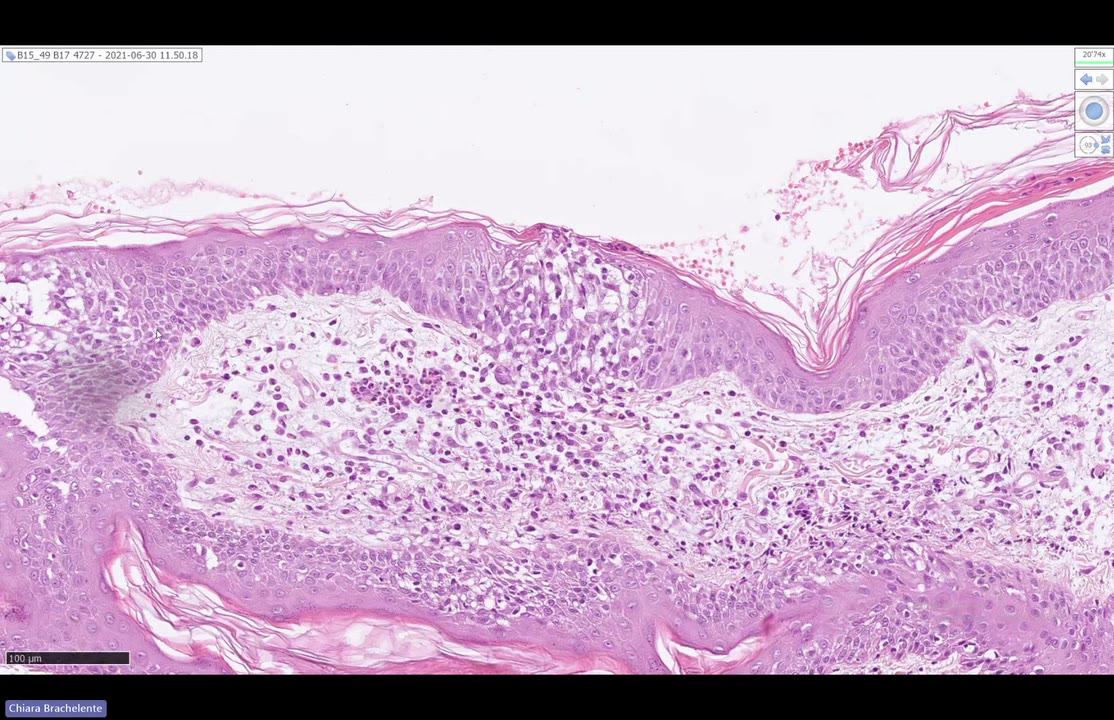
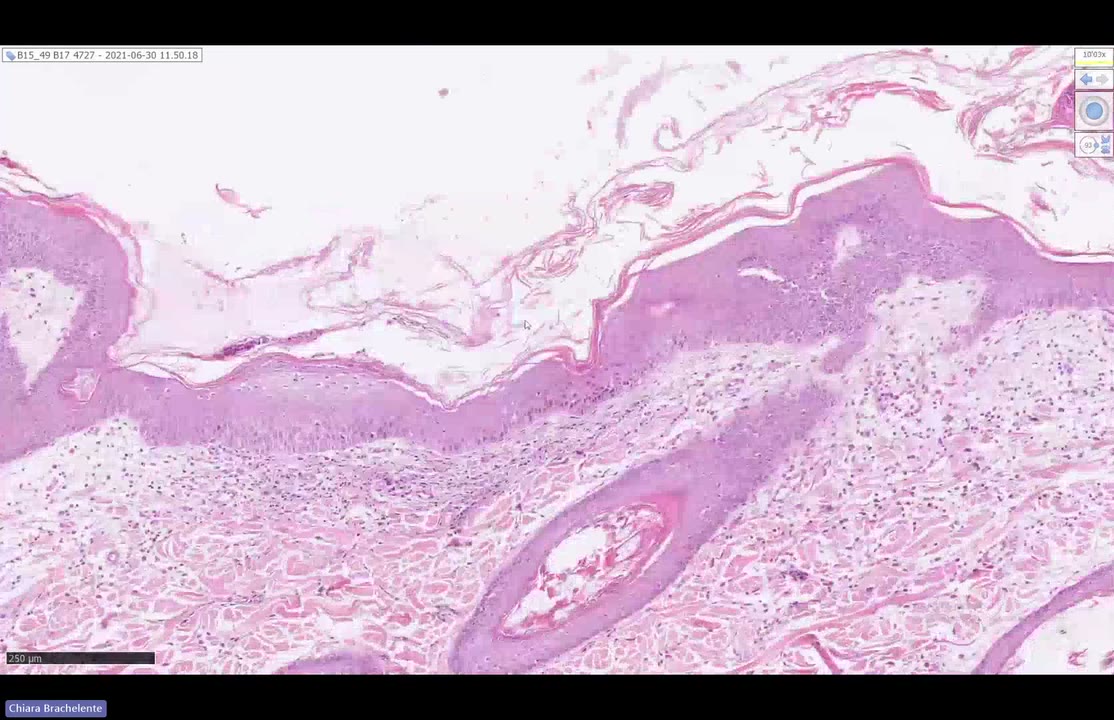
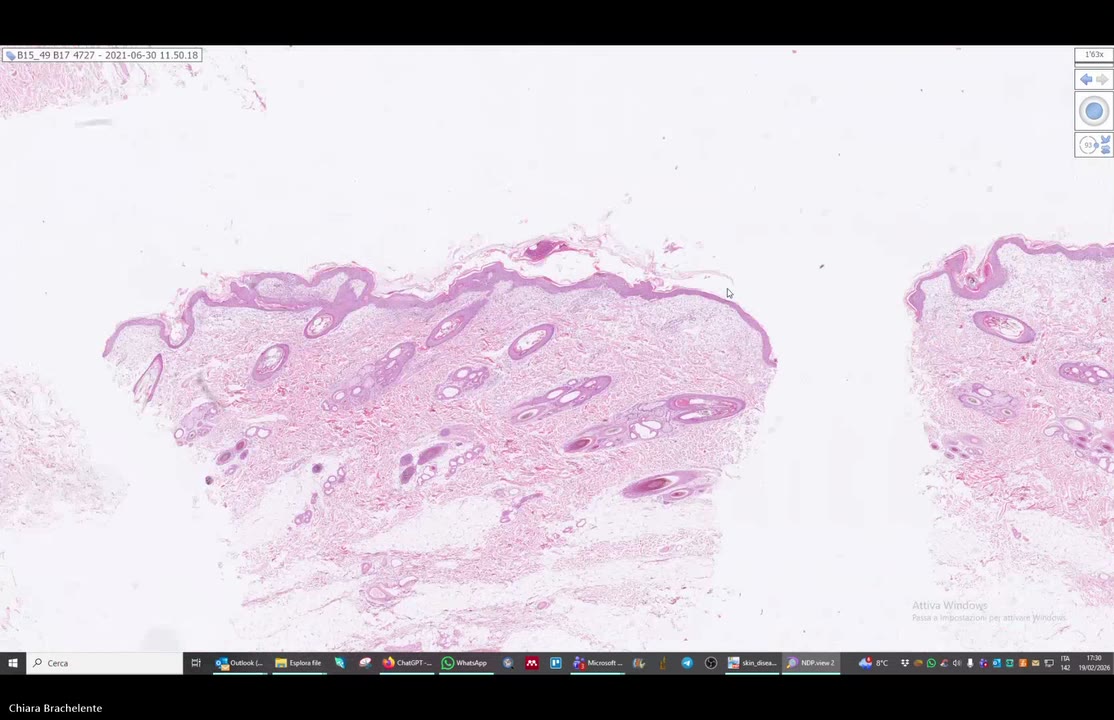
Morph: 學員版太長(perivascular to interstitial eosinophilic dermatitis with edema, hyperplasia, intraepidermal pustules…)。
Chiara/Ilaria 版:Chronic, moderate, perivascular to interstitial eosinophilic dermatitis with (epidermal hyperplasia,) severe spongiosis, severe crusting and eosinophilic pustules.
- ⭐ Ilaria:morph 要短——它是你「認為組織裡發生什麼」的聲明,描述裡已有的不必重寫,聚焦主要過程。
- ⭐ Chiara:用最少的詞、最高的特異性——給讀者「病因提示」。 這裡強調 spongiosis、crusting、eosinophilic pustules(都在上層表皮、由外而來)→ 暗示外寄生蟲;atopy/食物過敏不會有這麼重的痂與 spongiosis。同理 interface 要寫 apoptosis 在基底層還是全層——讀 morph 就想到不同的病。
- 沒找到蟎 → 不該被要求寫病名,只能列鑑別;寫「eosinophilic pustules」比「pustules」多給一點資訊。寫長不會被扣分,這只是在培養判斷。
🎯 教學重點(依逐字稿補):
- 找不到蟎時,patchy 的嗜伊紅球 exocytosis+spongiosis 小灶(nibbles)、spongiotic vesicle、subcorneal/intracorneal eosinophilic pustule 是外寄生蟲的線索;界線清楚、規則的橢圓空腔不像假影(假影應呈梭形裂隙),可能是隧道切面。
- 學員原本的 morph(“chronic severe perivascular to interstitial eosinophilic dermatitis associated with moderate to severe superficial dermal edema and hyperplasia with intraepidermal pustules and eosinophilic pustules”)被評為太長;Chiara 一開始的版本是 “chronic moderate perivascular to interstitial eosinophilic dermatitis with hyperplasia and severe crusting”,再補上 spongiosis(“we have to put it in there because it’s important”)。
- 新鮮的膿疱明確是嗜伊紅性,較痂化的膿疱難分是嗜伊紅球還是嗜中性球;能確定時寫 eosinophilic pustules 比只寫 pustules 多給資訊。
- 慢性看的是表皮/漏斗部增生、汗腺扭曲擴張、皮脂腺突出、compact hyperkeratosis(有時 parakeratosis)=搔癢造成的舔舐/自我創傷,不是只看浸潤細胞種類。
🧫 2. 貓 eosinophilic granuloma complex(slide 32,⏱ 21:00–45:00,Lotta 描述)
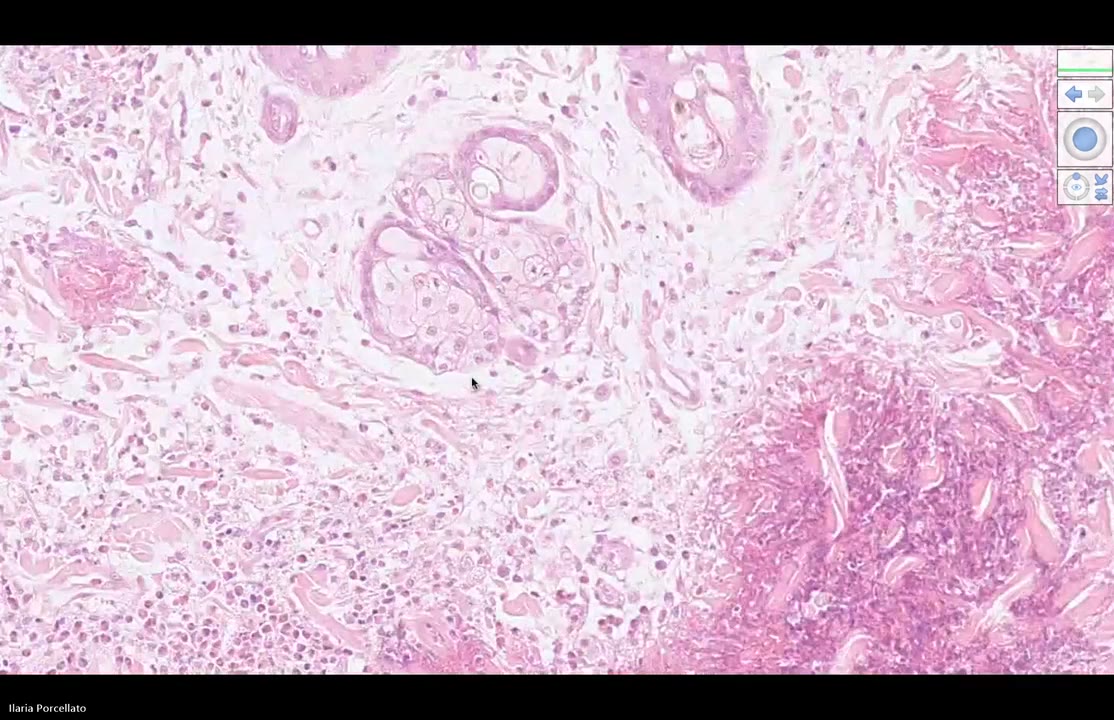
- 貓(皮脂腺、荷包蛋肥大細胞)、有毛皮膚;低倍最醒目的是結節狀病灶 → nodular pattern(也有 perivascular→interstitial,但主要是 nodular;「從來不會只有一種 pattern」)。
- 表皮:mild basket-weave orthokeratosis、mild regular hyperplasia;表面游離紅血球=取樣造成(無潰瘍時可忽略);藍色小點可能是細菌但看不清。
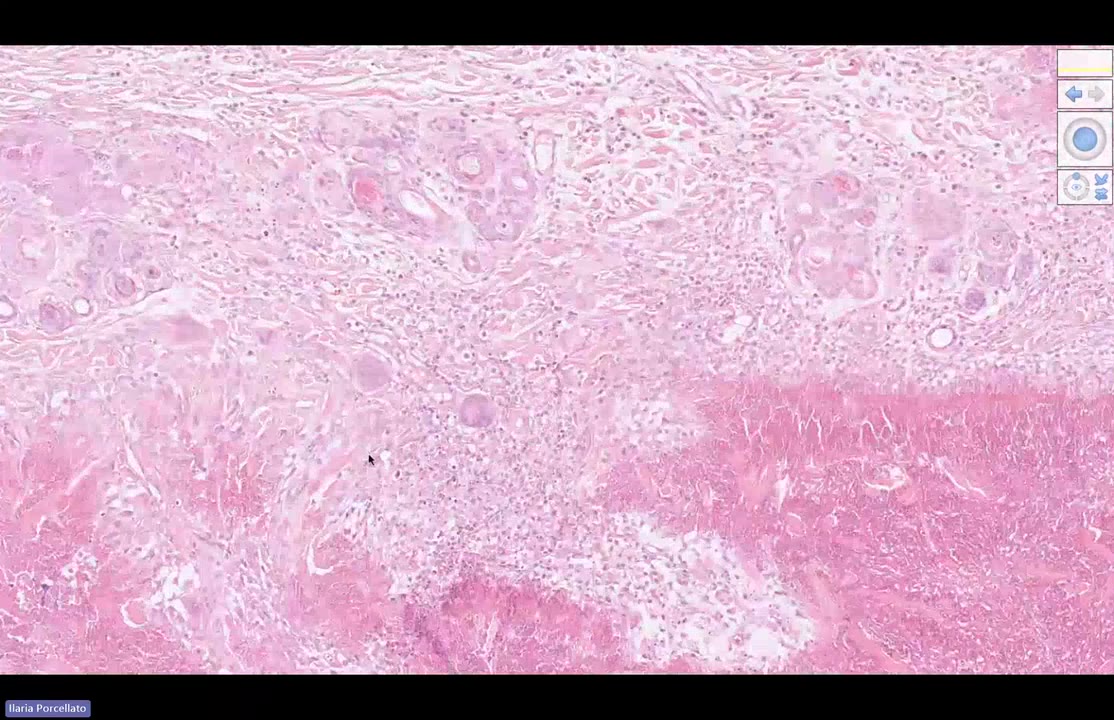
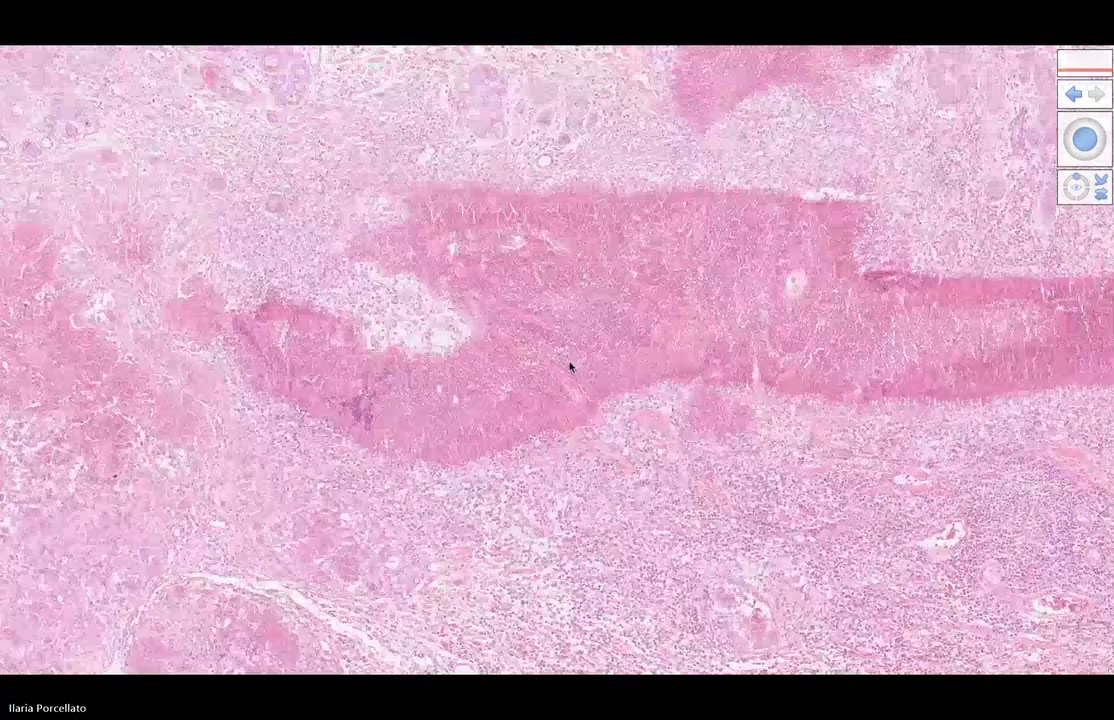
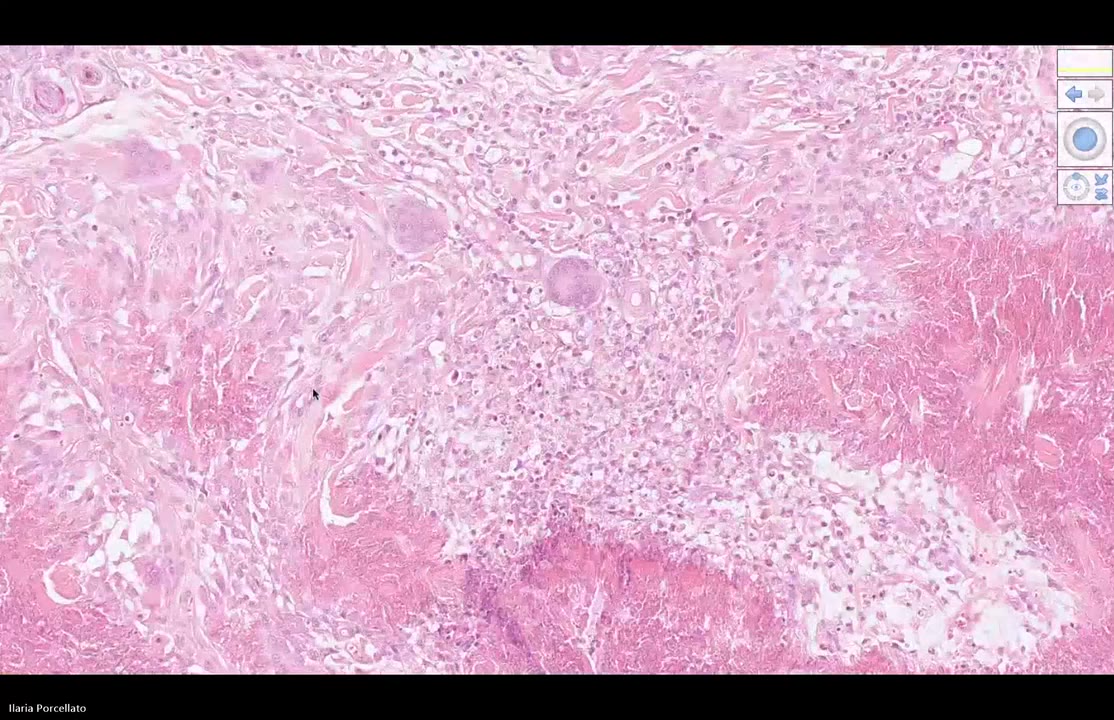
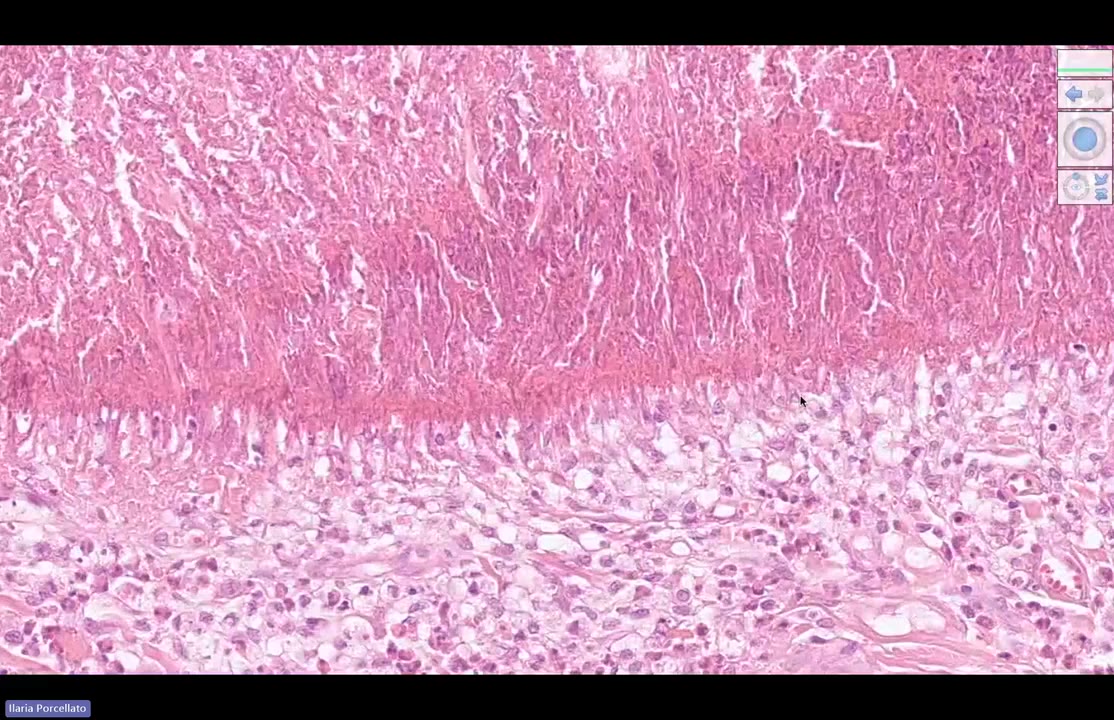
- 真皮:severe diffuse superficial to deep perivascular→interstitial 發炎(嗜伊紅球、肥大細胞、單核球)+多核巨細胞;moderate–severe 水腫;多個大型 flame figures 跨數個毛囊單位,內含脫顆粒嗜伊紅球+膠原;偏藍的區域=嗜伊紅球核的碎屑,不是壞死(壞死偏粉紅);周圍 fibroblasts 與 epithelioid macrophages 呈柵欄狀;深真皮局部淋巴球 perivascular。
- Morph(Lotta):Severe, chronic, multifocal to coalescing eosinophilic and granulomatous dermatitis → EGC ✅。Ilaria:加「with flame figures」——貓+granulomatous+flame figures 幾乎沒有疑問(非 pathognomonic 但最可能)。
- ⭐ 寫了 granulomatous 就不必再寫 giant cells/epithelioid cells——理所當然包含。
- ⭐ 描述順序的建議(Ilaria): 從病灶核心開始(結節:變性嗜伊紅球+碎屑+膠原 → 周圍 epithelioid cells、巨細胞、嗜伊紅球 → 漿細胞、淋巴球),細胞依數量多寡排序(肥大細胞不該排第一);表皮兩個字帶過。第三年可以「打磨」到這種程度;考試若從上往下比較安心也可以。
- Epithelioid macrophages 的定義(⏱ 38:00–43:00): 像上皮般排成柵欄圍住病灶、核染色質空泡狀、胞漿均質嗜伊紅、多角形;foamy macrophages 則圓、泡沫胞漿。Ilaria 考試時兩者都寫(epithelioid + foamy)以拿到關鍵字;Chiara:沒有尺寸門檻——epithelioid 只是巨噬細胞活化、走向巨細胞形成的形態階段,術語常互換、病理師之間用法也不一。
對照:2026.03 ECVD HistoRound(Monika:plaque vs granuloma=有無組織球圍 flame figure)|2025.12.13 ECVD HistoRound Case 4。
🎯 教學重點(依逐字稿補):
- 🔴 Ilaria 提醒型態學診斷(morphologic diagnosis, morph)最少五個要素:“remember the five words”——嚴重度(mild/moderate/severe)、pattern/病灶位置、過程名稱、修飾語(如 eosinophilic、ulcerative 等主要所見)、病程時間(acute/subacute/chronic)。Lotta 的 morph 被評為夠好,“it’s fine to be short”,只建議加上 flame figures 這個關鍵字。
- 判斷物種:皮脂腺+「荷包蛋」樣的肥大細胞 → 貓;嗜伊紅球多的地方本來就會有肥大細胞,但不該排在細胞清單第一個。
- 表皮表面的游離紅血球:沒有合併潰瘍時多半是採樣造成,可以忽略。
- Flame figure 內:變性嗜伊紅球+膠原纖維;偏藍的區域是嗜伊紅球核來的細胞碎屑,壞死通常偏粉紅——學員說 necrosis 不算錯,但講師會稱為 “degenerated eosinophils with cellular debris”。
- 🔴 描述可從結節核心開始(第三年可以這樣「打磨」);但 “at the exam if you feel safer to start from top and go down is totally fine”。
- Epithelioid 與 foamy macrophages 只是巨噬細胞活化程度不同的型態名稱,病理師之間用法也不一;講師之一的定義=很大、胞漿均質嗜伊紅、看起來像上皮細胞的巨噬細胞;討論最後提到排成一列很有提示性、附近多角形的也可算 epithelioid(講師回 “yeah sure”)。
🎯 本場考點速記
- Nibbles=蟎接觸點下方離散的嗜伊紅球小膿疱/spongiotic 灶——沒看到蟎也是外寄生蟲的線索;橢圓規則空腔可能是隧道切面。
- 慢性的證據不只細胞種類:表皮/漏斗部增生、汗腺扭曲、皮脂腺突出、compact 角化=慢性舔舐。
- Morph:最少的詞、最高的特異性、給病因提示;描述已寫的不重複;寫長不扣分。
- Chronic-active 是多餘的(Cullen)。
- Nodular pattern:描述從病灶核心開始、細胞依量排序。
- Granulomatous 已包含 epithelioid/giant cells;貓+granulomatous+flame figures → EGC。
- Epithelioid macrophage:柵欄排列、空泡狀染色質、均質嗜伊紅胞漿;與 foamy 常互換、無尺寸門檻。
- 藍色碎屑=嗜伊紅球核殘骸,不是壞死。
🔑 關鍵字
- Splendore–Hoeppli 反應 | macrophages | DermPath
- 相關:2026.05.08 ECVD HistoRound(Monika 的 Sarcoptes:堆疊痂=隧道)|2026.03.13 ECVD HistoRound|ECVD residents 官方錄影庫(dermatology4animals)
❓ 我的問題
- 沒錄到的開頭:第一片的玻片編號與完整描述?
- 延到 4 月的兩片(「pretty easy」)——4 月 Group 3 官方只有 Sonya 的 Equine 場,Chiara 那兩片是否另有錄影?
🧠 自我測驗(board 複習用,先想再點開)
Q1. 見 Case 1 第一張圖:犬皮膚,表皮內有垂直裂隙,另有一個界線清楚、很規則的橢圓空腔,片中找不到蟎。這個空腔可能代表什麼?為什麼講師不認為是假影?
答
- 可能是疥蟎隧道的起點或終點(大小接近蟎的橫切面,雖然以隧道來說稍小)。
- 若是細胞碎屑掉出造成的假影,應該是梭形裂隙;這個卻很圓、很橢圓、邊界非常清楚。
- 真皮表皮裂隙(邊緣粗糙)則判為假影,但由嚴重 spongiosis 促成。 → 見 Case 1
Q2. 什麼是 nibbles?出現在哪裡、由什麼組成、可能演變成什麼?
答
- 外寄生蟲下方、蟎與表皮最接近的接觸點。
- 表皮內 patchy、小而離散的發炎細胞(嗜伊紅球)聚集+spongiosis;表面可平坦或略凹陷(chat 引書:“may form small discrete pustules”)。
- 可演變成 spongiotic vesicle/spongiotic pustule 或 eosinophilic pustule。 → 見 Case 1
Q3. 片中完全找不到蟎,哪些組織所見仍讓講師傾向外寄生蟲?為什麼異位性皮膚炎(atopic dermatitis)或食物過敏比較不像?
答
- 離散的嗜伊紅球 exocytosis 小灶(nibbles)、含嗜伊紅球的 spongiotic vesicle、subcorneal/intracorneal eosinophilic pustule、橢圓隧道狀空腔。
- 嚴重 spongiosis+嚴重 crusting 都在上層表皮、“comes from the outside”。
- Chiara:atopy 或食物過敏不會有這麼重的 crusting 與 spongiosis。 → 見 Case 1
Q4. Case 1 的浸潤很急性(水腫、嗜伊紅球、嗜中性球),為什麼仍判為 chronic?哪些變化代表慢性舔舐/自我創傷?
答
- 嚴重表皮增生、漏斗部(infundibular)增生
- 汗腺扭曲(tortuosity)與擴張、皮脂腺突出
- compact hyperkeratosis,有時 parakeratosis → 搔癢造成舔舐/自我創傷 → chronic。→ 見 Case 1
Q5. 講師對「chronic-active」這個用語的看法?
答
- Ilaria 引 John Cullen:“do you know any passive inflammation?”——只要是發炎、還在進行,就是 active。
- 慢性病本來就會有一波波再急性化;用 chronic 即可(Ilaria 能理解使用者想表達「慢性但仍進行中」)。 → 見 Case 1
Q6. 🔴 寫出 Case 1 講師版的 morph,並說明為什麼強調 spongiosis、crusting、eosinophilic pustules。能不能直接寫出病名?
答
- Chronic, moderate, perivascular to interstitial eosinophilic dermatitis with (epidermal hyperplasia,) severe spongiosis, severe crusting and eosinophilic pustules.
- 「最少的詞、最高的特異性」:這三者都在上層表皮、由外而來 → 給讀者外寄生蟲的病因提示。
- 沒找到蟎 → “it wouldn’t be fair to ask here the name of the disease”,只列鑑別診斷;若看到蟎才把 sarcoptic mites 寫進 morph。
- 講師明說考試不會因 morph 太長或多寫 eosinophilic 而扣分,這只是培養判斷。 → 見 Case 1
Q7. 🔴 Ilaria 說 morph 最少要有的「five words」是哪五個要素?
答
- 嚴重度(mild/moderate/severe)
- Pattern/病灶位置
- 過程名稱(如 dermatitis)
- 修飾語=主要所見(如 eosinophilic、ulcerative)
- 病程時間(acute/subacute/chronic) → 見 Case 2
Q8. 同理,interface dermatitis 的 morph 為什麼要寫出 apoptotic cells 的位置?
答
- Apoptosis 在基底層還是在上層/全層,讀者讀 morph 時會想到不同的疾病。
- 原則:用最短的字數給出最多資訊。 → 見 Case 1(Chiara 的舉例)
Q9. 見 Case 2 低倍圖:貓有毛皮膚。如何判斷是貓?主要 pattern 是什麼?
答
- 皮脂腺型態+「荷包蛋(fried egg)」樣的肥大細胞 → 貓。
- Nodular pattern;也有 perivascular→interstitial,但主要是 nodular(“it’s never just a perivascular or nodular”——同一片總會有不只一種 pattern,以最醒目的為主)。 → 見 Case 2
Q10. 選擇題:Case 2 flame figure 內偏藍的區域最適合描述為?(A)凝固性壞死(B)變性嗜伊紅球與核來源的細胞碎屑(C)細菌菌落(D)黏液沉積
答
- (B)。藍色物質來自嗜伊紅球的細胞核碎屑;壞死通常偏粉紅。
- Flame figure 內另含脫顆粒嗜伊紅球與膠原纖維;周圍有 fibroblasts 與柵欄狀 epithelioid macrophages。 → 見 Case 2
Q11. 寫出 Case 2 學員的 morph,講師建議再加哪個關鍵字?要不要另外寫 giant cells/epithelioid cells?
答
- Severe, chronic, multifocal to coalescing eosinophilic and granulomatous dermatitis,建議加 with flame figures。
- 貓+granulomatous+flame figures → 嗜伊紅性肉芽腫複合症(eosinophilic granuloma complex, EGC)幾乎沒有疑問(非 pathognomonic 但最可能)。
- 寫了 granulomatous 就不必再寫 multinucleated giant cells/epithelioid cells,已理所當然包含。 → 見 Case 2
Q12. 🔴 比較 epithelioid macrophages 與 foamy macrophages 的形態;有沒有尺寸門檻?考試時怎麼寫比較保險?
答
- Epithelioid:像上皮般排成柵欄圍住病灶、空泡狀(vesicular)染色質、均質嗜伊紅胞漿、多角形。
- Foamy:較圓、泡沫狀胞漿(Case 2 部分區域被大量嗜伊紅顆粒遮蔽,較像 foamy)。
- Chiara:沒有尺寸門檻,epithelioid 只是巨噬細胞活化、走向巨細胞形成的形態階段;術語常互換,病理師之間用法也不一。
- Ilaria:自己考病理考試時 epithelioid 與 foamy 兩個都寫,確保拿到所有關鍵字。 → 見 Case 2
Q13. 🔴 Nodular pattern 的描述順序,講師建議怎麼排?細胞要怎麼列?考試可以從上往下嗎?
答
- 從病灶核心開始:變性嗜伊紅球+細胞碎屑+膠原 → 周圍 epithelioid cells、multinucleated giant cells、嗜伊紅球 → 漿細胞、淋巴球;最後再提表皮、fibroblasts、深層血管周圍淋巴球。
- 細胞依數量多寡排序(肥大細胞不該排第一);表皮沒什麼可寫時兩個字帶過。
- “at the exam if you feel safer to start from top and go down is totally fine”。 → 見 Case 2
Q14. Case 1 學員把表皮上的結構寫成 crust,講師提出什麼替代說法?表皮表面的游離紅血球又該怎麼處理?
答
- 保留大部分結構的可稱 intracorneal pustule(舊的 subcorneal pustule 往上移;該處角質層很薄);膿疱終究會變成痂,是細微差別。→ 見 Case 1
- 表面游離紅血球若沒有合併潰瘍,多半來自採樣,可以忽略。→ 見 Case 2